
- Home
- Custom Medical Tubing & Extrusions
- Multi-lumen Tubing
Multi-lumen Tubing
Complex shapes and many lumens in a single extruded tube, so one device can do more. Tooled and extruded in-house, from prototype lots to commercial runs.
What is multi-lumen tubing?
Multi-lumen tubing, also called multilumen or multi-lumen extrusion, is a form of lumen tubing that puts several channels in one shaft.
Multi-lumen tubing is extruded medical tubing with more than one hole, or lumen, running through it. Each lumen can carry out a different task inside the same device, so gases, liquids and even electrical wiring can travel through one tube without risk of cross-contamination. As medical devices get smaller while doing more, multi-lumen tubing is how designers fit that added function into a smaller footprint.
Common uses for the separate lumens in a multi-lumen catheter include:
- Delivering and withdrawing fluids
- Steering a catheter with a wire
- Grasping tissue for a biopsy
- Running a fiber optic line so physicians can monitor progress during surgery
- Carrying electrical wiring for minimally invasive surgical instruments
Multi-lumen catheter extrusion services
MicroSpec has earned a global reputation for extruding some of the smallest, most complex multi-lumen tubing in the industry, with some of the tightest tolerances. We have extruded multi-lumen tubing as small as 0.012 inch (0.305 mm) OD and multi-lumen bump tubing as small as 1.2 Fr. Within a single tube, we can vary:
- Lumen shape, size, number and symmetry
- Shaft diameter and wall thickness
- Web thickness between lumens
- Durometer hardness, including soft distal and stiff proximal sections
In 2013 we invented BAT extrusion tooling and used it to bring a 28-lumen tube into specification in just 15 minutes, a step change for multi-lumen extrusion. We have since applied BAT tooling to other multi-lumen tubes and bump tubing, and in 2024 to co-extrusion. Our machine shop can make highly complex multi-lumen tools in days, not weeks, and we run multi-lumen tubing in nearly every resin we extrude.
Multi-lumen designs combine naturally with our other capabilities. We run co-extruded and tri-extruded multi-lumen tubing, multi-lumen tubing with encapsulated radiopaque stripes, tubes with a helical twist, and micro-extrusions for pediatric and minimally invasive devices. Multi-lumen tubing is closely related to profile extrusions, which use the same technology.
Materials for multi-lumen tubing
Material selection affects both how the catheter performs and whether the design can be extruded at all. Beyond function, a multi-lumen design depends on the melted polymer’s melt strength, draw-down behavior, thermal stability, tackiness or lubricity, hardness, moisture sensitivity and gel content. We most often run multi-lumen tubing in polyurethanes, nylons and Pebax®, and in engineering resins such as PEEK when a device calls for it.
On this page
Capabilities
| Smallest multi-lumen | 0.012 in (0.305 mm) |
| Tubing OD range | 0.004 to 0.625 in (0.1 to 15.9 mm) |
| Bump tubing | Down to 1.2 Fr |
| Run size | Prototype to millions |
| Validation | OQ, PQ, PPAP |
Have a print?
Send it over, or call and describe the problem. We’ll tell you honestly what it will take.
Common profiles
Classic profiles, still going strong.
Some of the first multi-lumen designs are still among the most common. Every tube we run starts from your print, but these are familiar starting points.
Double D
Two D-shaped lumens split by a single web. One of the first vascular access designs.
Triple lumen
The “smiley-faced” tube: one large lumen over two small. Still widely used today.
Striped co-extrusion
Large working lumen with encapsulated stripes for visibility or radiopacity.
Satellite lumens
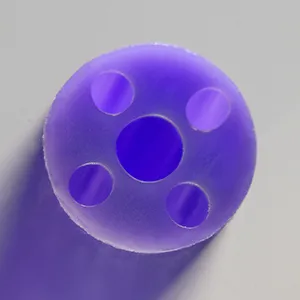
A central lumen ringed by smaller ones, for wires, fluids and sensors in one shaft.
From our lines
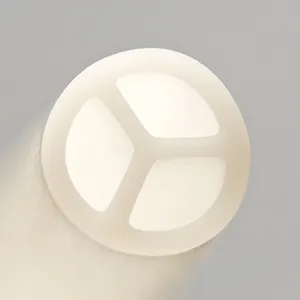
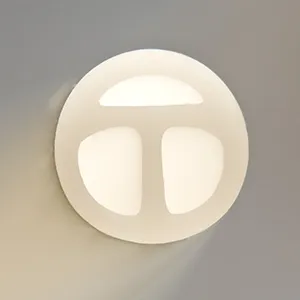
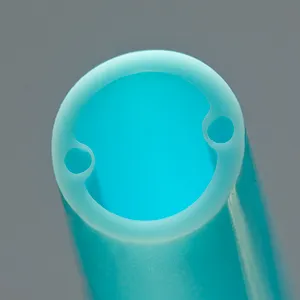
Multi-lumen tubes we’ve extruded.
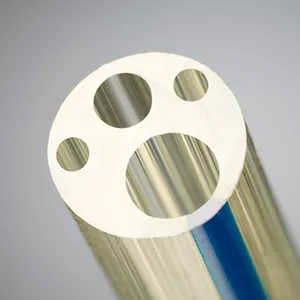
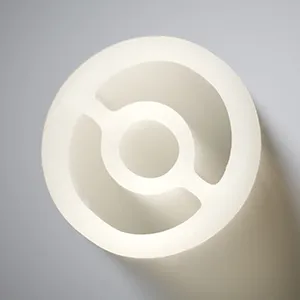
Design considerations
Six things to settle before the first tool is cut.
Complex multi-lumen tubing brings extrusion challenges that simple single-lumen tubing never does. These are the issues we see most often, and the ones worth discussing early.
01
Make sure it stacks up
Add every lumen, wall and web dimension with its tolerance. If the total exceeds the OD, the tube is too big. It doesn’t stack.
02
Don’t over-specify
Tolerances so tight that normal in-spec variation reads as an incapable process are a dead end at validation.
03
Interior walls
Getting plastic to flow deep inside a complex geometry is the hardest part. Thin interior walls and webs deserve early review.
04
Material flow
Multi-lumen extrusion is very sensitive to viscosity and melt flow index. We define an acceptable MFI range for every validated part.
05
Matching durometers
Tools that make a stiff proximal section may not make the softer distal one. Planning for both avoids costly tool redesigns.
06
Real geometry
Specified shapes must be extrudable. Tip and die design is where most multi-lumen know-how lives, and it is ours in-house.
Want a second set of eyes on your drawing?
Working with MicroSpec
Engage your extruder early.
Getting a multi-lumen tube finalized on time comes down to understanding the challenges up front. Here’s how a project typically moves.
01
NDA and concept
We sign a mutual non-disclosure agreement, then review your concept drawing, materials and the form, fit and function of the tube.
02
Honest feasibility
We share what we’ve learned running similar parts in the same resin, and give you honest feedback on the feasibility of your extrusion.
03
Tooling and prototypes
Our machine shop designs and cuts proprietary tips and dies, and prototype lots run on dedicated R&D extruders.
04
Validate and scale
OQ, PQ and PPAP validation, then commercial runs on the same floor, measured by laser gauging and vision systems.
Innovation is a key force in multi-lumen development. To make the most of working with a multi-lumen extruder, the OEM should listen to the extruder and share functional concepts of the new device.
Tim Steele, Founder, in “Demystifying Multi-Lumen Tubing,” Medical Product Outsourcing
Keep exploring
Related extrusions.
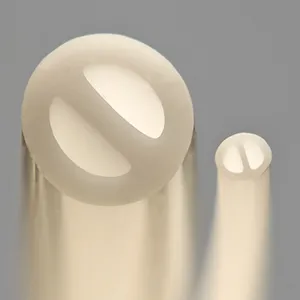
Bump tubing
Multi-lumen bump extrusions down to 1.2 Fr.
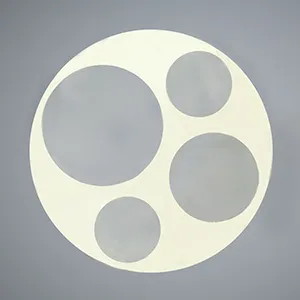
Co-extrusions
Layered walls and encapsulated radiopaque stripes.
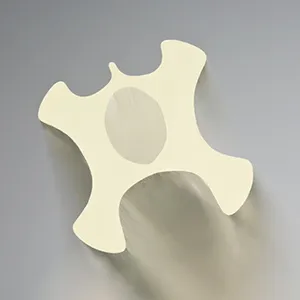
Profile extrusions
Non-round tubes and lumens, from D shapes to hearts.
Questions
Multi-lumen tubing, answered.
Still have a question about your design? Our engineers are happy to talk it through.
How small can multi-lumen tubing be extruded?
We have extruded multi-lumen tubing as small as 0.012 inch (0.305 mm) OD, and multi-lumen bump tubing as small as 1.2 Fr. We specialize in tubing from 0.004 inch to about 0.625 inch (0.1 to 15.9 mm) OD.
How long has multi-lumen tubing been used in medical devices?
Extruded multi-lumen tubing has been used for many decades. The Double D and the triple-lumen “smiley” tube were among the first designs for vascular access and are still common today. Use continues to grow with minimally invasive and robotic surgery.
What is the most common mistake in multi-lumen tube design?
Dimensions that don’t stack up. When every lumen, wall and web tolerance is added back in, the tube ends up larger than the specified OD. Closely related is over-specifying tolerances so tightly that the process can’t be shown capable at validation.
Can you extrude a multi-lumen tube with different durometers?
Yes. Matching one geometry across two durometers is common for catheters with a soft distal tip and a stiffer proximal shaft. The two durometers flow differently, so we plan the tooling for both from the start.
Do you run prototype lots or only production?
Both. We run small development lots and high-volume commercial runs of millions of tubes in the same facility, with OQ, PQ and PPAP validation in between.
Have a multi-lumen design that won't stack up?
Send us your print or describe the problem. An engineer will follow up personally to walk through lumens, walls, material and schedule.
Start a project
Tell us about your part and our team will follow up personally.
Have full drawings and tolerances? Use our detailed request form.