
- Home
- Custom Medical Tubing & Extrusions
- Catheter Tubing
Catheter Tubing
Custom catheter tubing extruded to your print: multi-lumen, tapered, co-extruded and micro catheter shafts, from concept to commercial run.
Custom catheter tubing, extruded to your print
Catheter tubing is the core of almost every catheter: the shaft that carries fluids, wires, balloons or sensors from outside the body to where they are needed. Since 1989 MicroSpec has extruded custom catheter tubing for medical device companies around the world, from simple single-lumen shafts to some of the smallest and most complex catheter extrusions in the industry.
We work as an extension of your development team. Research, tooling, extrusion and quality all stay in-house in Peterborough, New Hampshire, so the same people who solve your prototype carry it through validation into commercial production.
Catheter shafts we extrude
| Catheter tubing type | What it does | Learn more |
|---|---|---|
| Multi-lumen catheter tubing | Several independent channels in one shaft | Multi-lumen tubing |
| Tapered (bump) catheter tubing | Small distal end, larger proximal end, no bonded joint | Bump tubing |
| Layered or striped shafts | Combine materials, add radiopaque stripes or liners | Co-extrusions |
| Microcatheter tubing | Very small ODs and thin walls | Micro-extrusions |
| Non-round shafts | D-shapes and custom profiles | Profile extrusions |
Common catheter applications
- PICC and central venous catheters, where we are a recognized leader in vascular bump tubing
- Pediatric catheters, including our 1.9 Fr pediatric bump tube, now a world standard
- Dilation and balloon catheter shafts, often in nylon grades such as Vestamid®
- Steerable catheters and delivery systems with wire and fluid lumens
- Multi-lumen catheters for minimally invasive surgery, biopsy and fiber optic visualization
Materials for catheter tubing
Catheter performance starts with the right material. We extrude medical polyurethanes such as Carbothane®, Pellethane® and Tecoflex®, nylons and Pebax®, engineering resins including PEEK, and fluoropolymers for liners. We help you choose the material and durometer for each section of the shaft.
Catheter contract manufacturing, done carefully
We support your validation with our JumpStart Validation Program, which plans validation from the first prototype and runs through OQ and PQ in defined phases. Because we design all of our extrusion tools in-house, we can react quickly when a tool or process needs to change during development. Read how the program works.
On this page
Catheter tubing facts
| Experience | Since 1989 |
| Smallest multi-lumen | 0.012 in (0.3 mm) OD |
| Pediatric bump | 1.9 Fr |
| Validation | JumpStart, OQ/PQ, PPAP |
| Quality system | ISO 13485:2016 |
Developing a catheter?
Bring us in at the concept stage. It can save months of extrusion development.
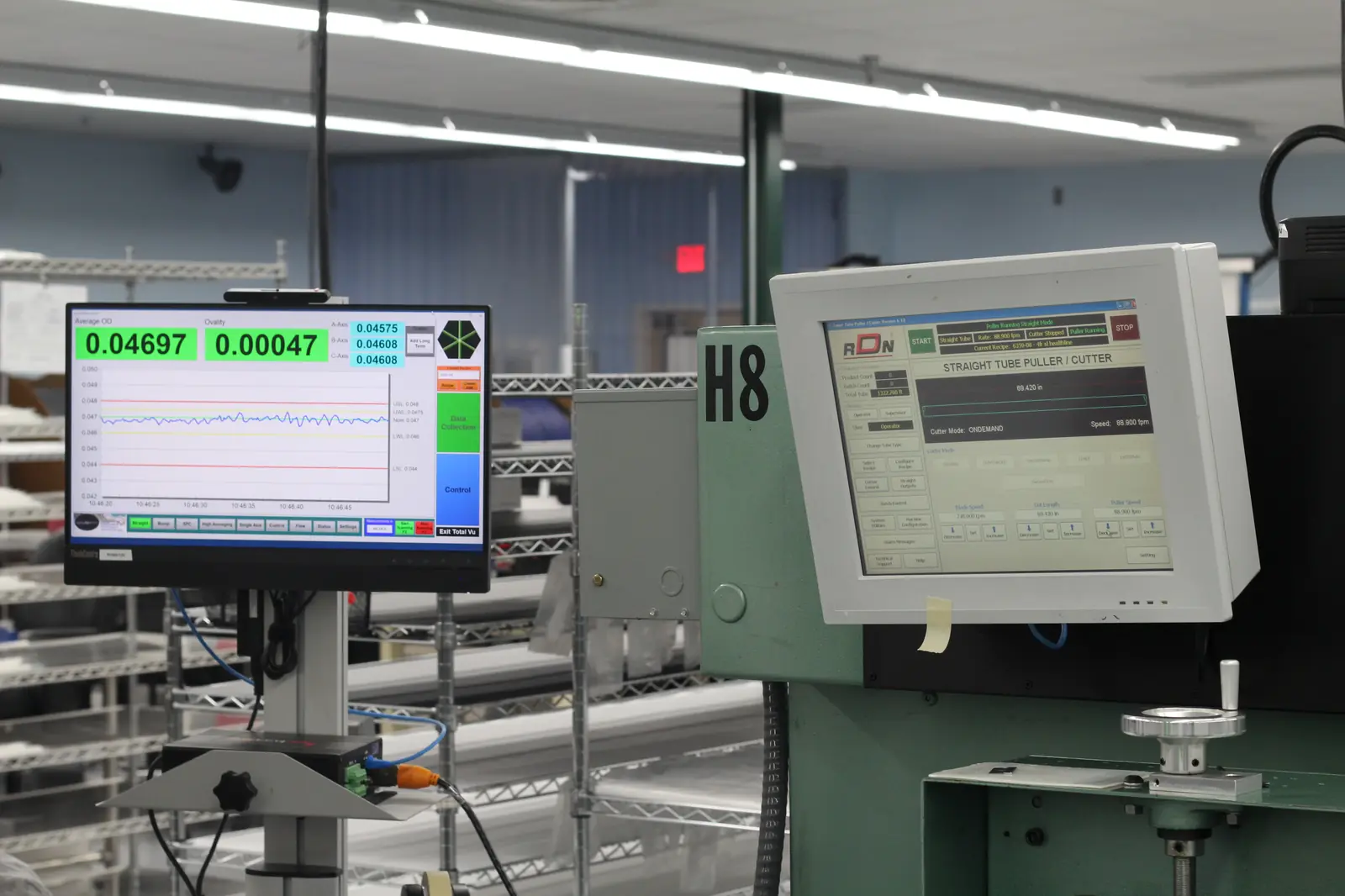
Why engage early
Call the extruder at concept, not after the design is frozen.
In his 2022 interview with Medical Product Outsourcing, Tim Steele put it simply: contacting the extruder at concept lets a device maker learn what will and will not work before designing the part, and that can save months of extrusion development. Early involvement also makes validation a focus from the start.
Send a concept drawing under a mutual NDA and we will give you honest feedback on the feasibility of your extrusion.
Process
From concept to commercial catheter tubing.
01
Concept review
We review your drawing, materials and the form, fit and function of the shaft.
02
Prototype
Proprietary tooling is designed and cut in-house, and prototype lots run on R&D extruders.
03
Validate
JumpStart Validation plans OQ and PQ from the first run, with PPAP where needed.
04
Produce
Commercial runs with in-line laser gauging, vision inspection and Kanban programs.
Ready to talk through your catheter?
Keep exploring
Explore catheter extrusion capabilities.
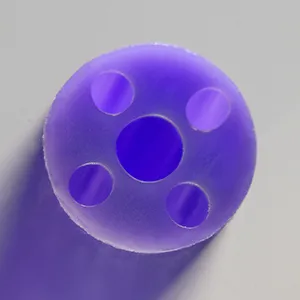
Multi-lumen tubing
More function in one shaft.
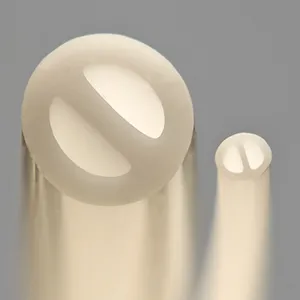
Bump tubing
Tapered shafts for PICC and pediatric lines.
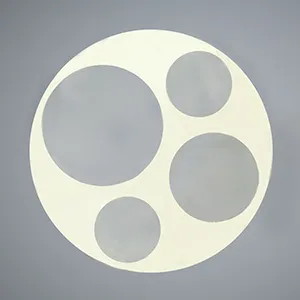
Co-extrusions
Stripes, liners and layered walls.
Questions
Catheter tubing, answered.
Have a question about catheter extrusion? Our engineers can help.
What is catheter tubing made of?
Most catheter tubing is extruded from medical polyurethanes, nylons, Pebax, or combinations of these, with engineering resins like PEEK and fluoropolymer liners for specific needs. The right choice depends on flexibility, pushability, bonding and sterilization.
Can you make multi-lumen catheter tubing?
Yes. Multi-lumen tubing has been a specialty since our beginning. We have extruded multi-lumen tubing as small as 0.012 inch (0.3 mm) OD and tubing with over 45 lumens.
Do you offer catheter contract manufacturing?
We are a custom extrusion partner. We extrude the catheter tubing itself, from prototype through validation and commercial runs, and work closely with your engineering and quality teams.
How early should we involve an extruder?
At the concept stage if possible. Early involvement avoids design flaws in the extruded tube, saves redesign time and keeps validation in view from the start.
What do you need to quote catheter tubing?
Your drawing or specifications: OD and ID with tolerances, wall thickness, lumen count and sizes, cut length, material and durometer, and quantities for prototype, validation and production.
Developing a new catheter?
Send us your specs, drawing or just describe the problem. A member of our team will follow up personally to walk through tolerances, materials and schedule.
Start a project
Tell us about your part and our team will follow up personally.
Have full drawings and tolerances? Use our detailed request form.