
- Home
- Custom Medical Tubing & Extrusions
- Bump Tubing & Tapered Tubing
Bump Tubing & Tapered Tubing
Single and multi-lumen bump tubing, also called taper tubing, from the company that extruded the first multi-lumen bump tube in 1990.
What is bump tubing (tapered tubing)?
Bump tubing, also called tapered tubing, taper tubing or draw down tubing, is a single extruded tube with different outside diameters along its length. The diameter changes in a controlled transition, or “bump,” and may vary more than once along the tube. Generally the smaller end goes into the body and the larger end attaches to the device.
Tapered tubing lets designers shrink distal dimensions while keeping full functionality at the proximal end. Instead of bonding two tubes of different sizes together, one continuous tube carries the same lumens from hub to tip. That removes a joint, a potential leak path and an assembly step, and it gives the catheter a smoother transition.
Bump tubing at MicroSpec
In 1990, the same year we ran our first extrusion, we extruded the first multi-lumen bump tube in the world. In 1992 MicroSpec became the first company in the world to sell multi-lumen bump tubing. By 2003 bump tubing had become our number one product.
In 1999 and 2000 Tim Steele designed and extruded the first 1.9 Fr single and dual lumen pediatric bump tubes, introduced at Medtec in Stuttgart and MD&M in New York. Our 1.9 Fr pediatric bump tube is now acknowledged around the world as the standard for pediatric catheters, and new pediatric designs, including a three-lumen 2.6 Fr bump tube, are in development.
Capabilities
- Single-lumen and multi-lumen bump tubing, down to 1.2 Fr
- Our smallest: a 4-lumen bump tube with a distal OD of 0.010 inch (0.25 mm) and a proximal OD of 0.042 inch (1.07 mm)
- Multiple transitions along one tube, with controlled transition lengths
- Co-extruded bump tubing with layered walls or radiopaque stripes
- Custom annealing ovens, designed in-house in 2009 for our PICC bump tubing work
- Bump tubing in polyurethanes, nylons, Pebax® and other resins
PICC lines and vascular access
Bump tubing is at the heart of many peripherally inserted central catheters (PICCs). We produced and sold our first PICC bump tube in 1992 and have been a recognized leader in vascular bump tubing ever since. In a 2022 interview with Medical Product Outsourcing, Tim Steele described working closely with the C.R. Bard engineering team on a new family of PICC bump tubes; in less than four years, Bard became the number one PICC manufacturer in the USA. Read the interview.
On this page
Bump tubing facts
| First bump tube | 1990 |
| First multi-lumen bump | 1990, world first |
| Pediatric | 1.9 Fr, world standard |
| Smallest distal OD | 0.010 in (0.25 mm), 4-lumen |
| Quality system | ISO 13485:2016 |
Designing a tapered catheter?
Send us the proximal and distal dimensions and the transition you need.
1990
First bump tube extruded
1990
First multi-lumen bump tube
1.9 Fr
Pediatric bump tube standard
0.010″
Smallest 4-lumen distal OD (0.25 mm)
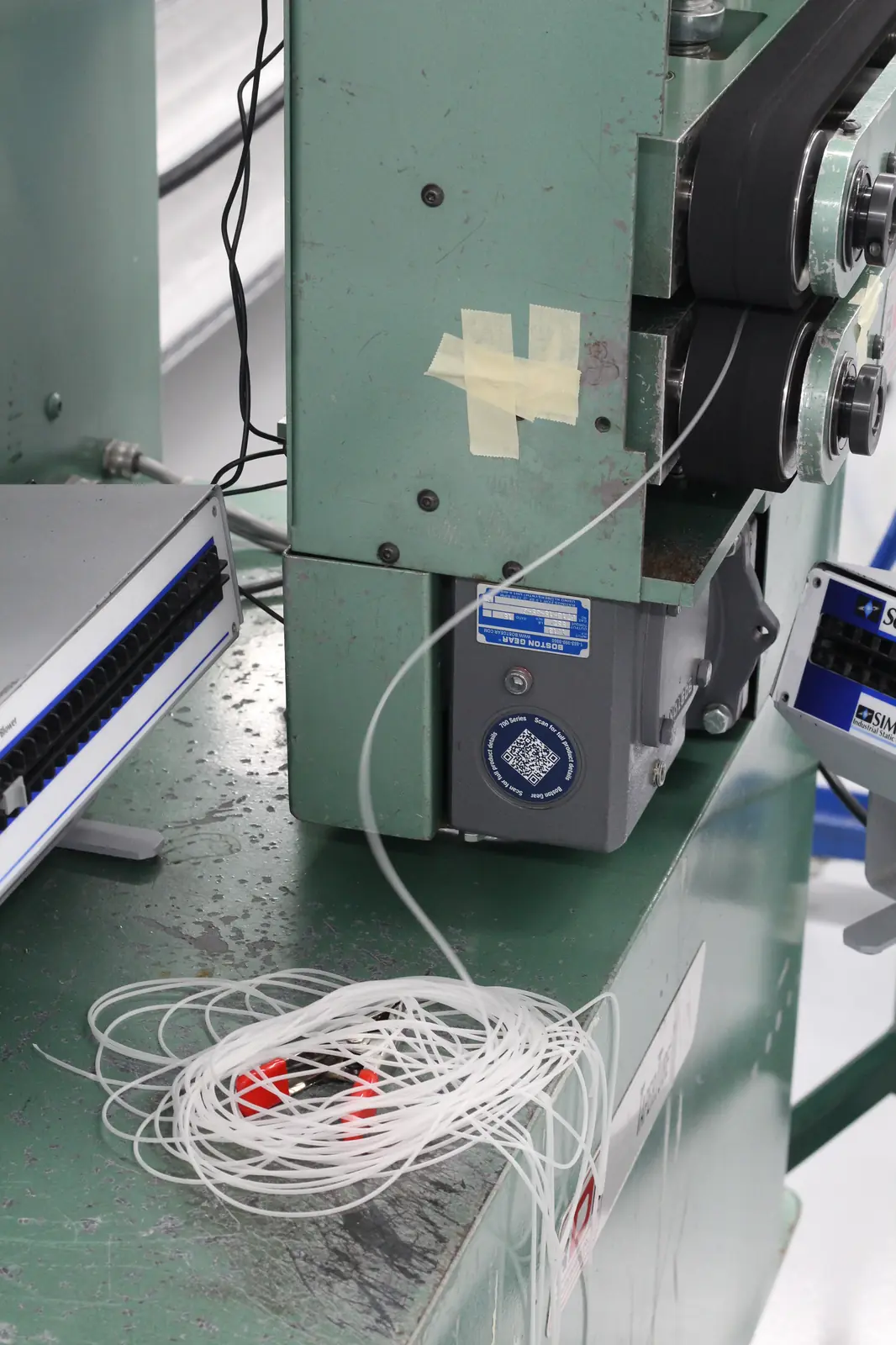
Inside the process
A bump is made on the line, not in assembly.
A bump tube is drawn down as it is extruded. Puller speed, extrusion rate and cooling are changed on a precise schedule so the outside and inside diameters, wall and lumens all shrink together through the transition. In a multi-lumen bump tube every lumen has to stay open and in position through that change.
That is why tooling and process experience matter so much. Our proprietary tooling, including the BAT tooling technology we applied to bump tubing in 2015, is designed and built in our own machine shop.
Design checklist
What to tell us about your bump tube.
These details let us quote accurately and plan the tooling from the start.
01
Proximal and distal sizes
OD, ID and wall at each end, with tolerances.
02
Transition length
How long the taper should be, and where it sits along the tube.
03
Lumen layout
Number, shape and position of lumens, and which must stay a minimum size distally.
04
Material and durometer
Including any change in hardness between ends.
05
Cut length and pitch
Overall length and the repeat spacing between bumps.
06
Volumes and validation
Prototype quantities, validation plans and expected annual volume.
Have a print ready? Send it over.
Keep exploring
Related extrusions.
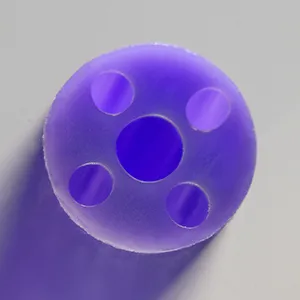
Multi-lumen tubing
Many lumens in one tube, often combined with a bump.
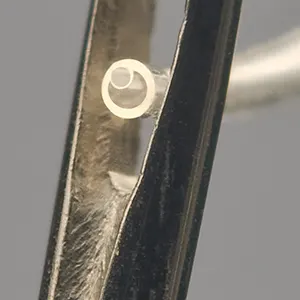
Micro-extrusions
Tubing down to 0.004 inch (0.1 mm) OD.
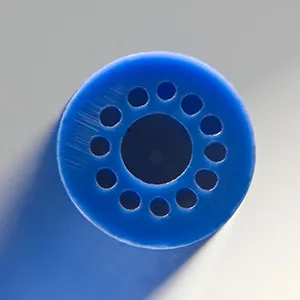
Catheter tubing
Custom catheter shafts from prototype to production.
Questions
Bump tubing, answered.
Have a question about a tapered design? Our team can help.
What is the difference between bump tubing and taper tubing?
They are the same thing. Bump tubing, taper tubing and draw down tubing all describe a single extruded tube whose diameter changes along its length.
How small can bump tubing be?
We extrude multi-lumen bump tubing as small as 1.2 Fr. Our smallest bump tube to date is a 4-lumen tube with a distal OD of 0.010 inch (0.25 mm) and a proximal OD of 0.042 inch (1.07 mm).
Can bump tubing have more than one lumen?
Yes. MicroSpec extruded the first multi-lumen bump tube in the world in 1990, and in 1992 became the first to sell multi-lumen bump tubing.
Can bump tubing be co-extruded?
Yes. Bump tubing can be combined with co-extrusion for layered walls or encapsulated radiopaque stripes, and with soft and stiff durometers in the same part.
Why is bump tubing used for PICC lines?
A PICC needs a small distal section to enter the vein and a larger proximal section to connect to the hub and carry flow. Bump tubing makes that change in one continuous tube with no bonded joint.

Need a tapered tube done right?
Send us your specs, drawing or just describe the problem. A member of our team will follow up personally to walk through tolerances, materials and schedule.
Start a project
Tell us about your part and our team will follow up personally.
Have full drawings and tolerances? Use our detailed request form.