Custom medical extrusion since 1989
Medical extrusion, measured in microns.
Some of the smallest, most complex medical tubing in the industry, extruded for the world’s foremost device makers. Research, tooling, extrusion and quality all stay under one roof in Peterborough, New Hampshire.
0.004″
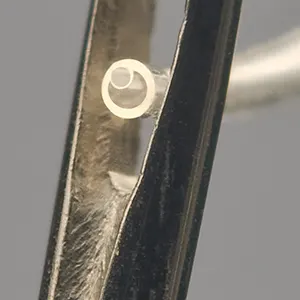
Smallest tubing OD (0.1 mm)
18
Extrusion lines in-house
48,000
Square foot facility
ISO 13485
Certified quality system
A medical extrusion partner
For more than 36 years, medical device companies the world over have turned to MicroSpec for tubing that challenges the limits of extrusion technology.
Advanced medical tubing, done right
We specialize in advanced medical tubing. We extrude custom medical tubing with outside diameters from 0.004 inch (0.1 mm), in quantities from small development lots to millions of tubes. That range covers catheter shafts, delivery systems, guidewire jackets and the miniature multi-lumen parts that make less invasive procedures possible.
An extension of your development team
From your first call, our team walks through your tolerances, wall thickness, lumen count and dimensions, material and durometer before a number is ever quoted. Then we carry the same part from prototype through validation into commercial production, on the same floor, with the same people who first solved it.
Have a tolerance other extruders turned down?
What we extrude
Six specialties.
One standard.
Every job at MicroSpec starts as a conversation about your print, not a part number. These are the medical extrusions our lines are built to run.
01
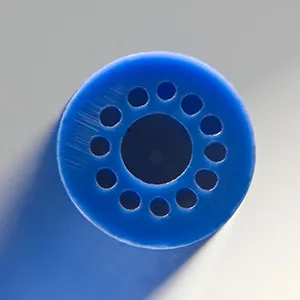
Multi-lumen tubing
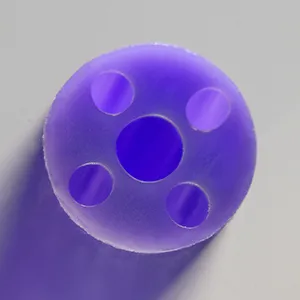
Complex shapes and many lumens in a single tube, so one device can do more. We extrude multi-lumen parts as small as 0.012 inch (0.3 mm), and our BAT tooling brought a 28-lumen tube into spec in 15 minutes.
02
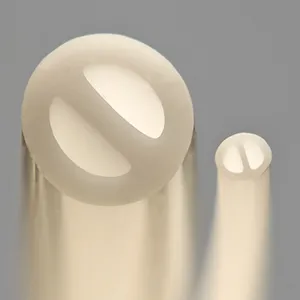
Bump tubing
Extruded here since 1990. In 1990 we extruded the first multi-lumen bump tube in the world, and our 1.9 Fr pediatric bump tube is now the world standard.
03
Co-extrusions
Layered materials that give one tube the flexibility to reach further into the vasculature and the strength to push it there, from multi-layer walls and liners to encapsulated radiopaque stripes.
04
Micro-extrusions
Tubing with an outside diameter as small as 0.004 inch (0.1 mm) and walls as thin as 12.5 microns. Micro-miniature dimensions support minimally invasive and pediatric devices.
05
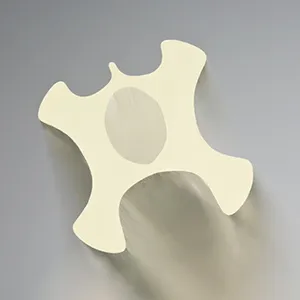
Profile extrusions
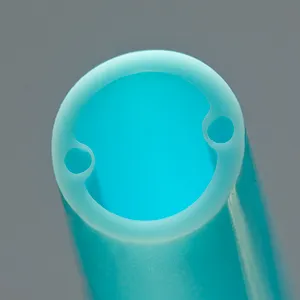
Some of the most complex and unorthodox profiles in the industry, from D-shaped tubes to heart-shaped lumens, engineered when a round tube can’t do the job.
0.003″Finished OD (0.075 mm), coated wire
06
Coated wire
Continuous and discrete lengths. In 1993 we put a 12-micron coating on a 50-micron wire, and we hold a patent for producing steerable coated guidewires with a uniform coating.
Don’t see your part? Send us the print anyway.
We enjoy the challenge of taking on jobs other people won’t. If anyone can do it, MicroSpec can.
Tim Steele, Founder and CEO
Concept to commercial run
Nothing leaves
the building.
MicroSpec stands alone as an independent extrusion house. Research and development, tooling and extrusion stay entirely in-house, and every tool we extrude through is designed and fabricated in our own machine shop.
01
Research & Development
In-house development where new materials, processes and tools are proven before they reach your part.
- Raw material testing
- Custom formulations
- New lumen geometries
02
Tooling
Everything we extrude through, we make. Our machine shop designs and fabricates all of our extrusion tools in-house, including BAT tooling, a proprietary tool technology unique to MicroSpec. It is what sets us apart from other extruders.
- State-of-the-art wire EDMs
- MasterCAM programming
- Custom proprietary crossheads and dies
03
Extrusion
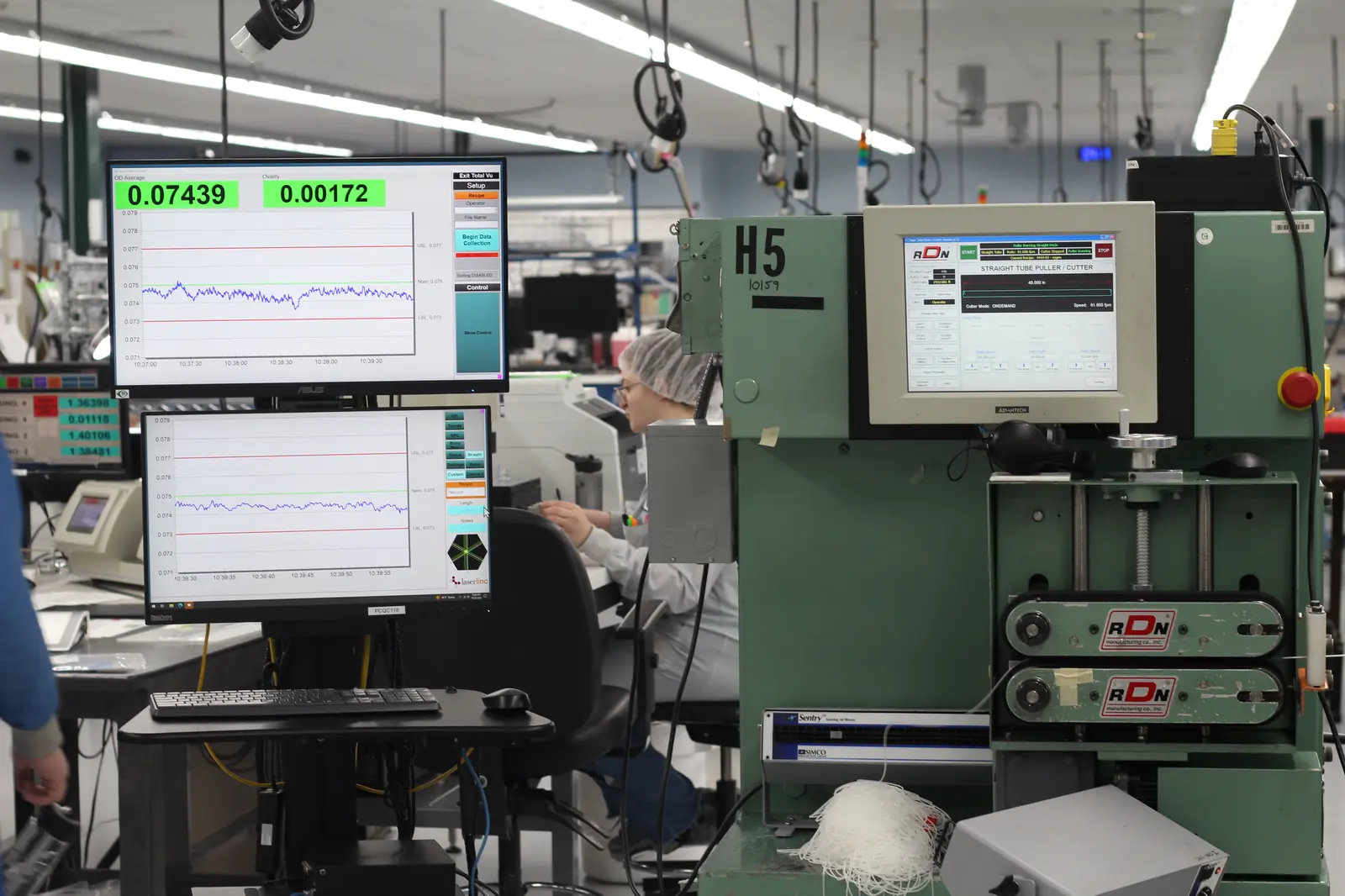
18 extrusion lines and 22 extruders in a controlled environment, from prototype lots to high-volume runs.
- Co-extrusion and tri-extrusion lines
- Annealing services
- Kanban programs
04
Quality
Tubing is evaluated at the start of, during and after every run, and again before it ships.
- Vision systems and laser gauging
- Burst and tensile testing
- JumpStart Validation, OQ and PQ
ISO 13485:2016 certifiedCertified by Intertek. We work alongside your quality team to align inspection methods, with dock-to-stock certifications in place.
Materials knowledge
We help you choose the resin, too.
Our experience extruding medical-grade polyurethanes and nylons may be unmatched anywhere, and we are a pioneer in high-heat engineering plastics and thermoplastic fluoropolymers. Whether your part is co-extruded or made from a custom compound, we’ll advise you on the material and durometer that best fit your application during the quoting phase.
Don’t see your resin here? Contact us.
Our history
Thirty-six years
of firsts.
MicroSpec began in 1989 without permanent equipment, a permanent home or even a customer. It had a clear vision: to become a driving force for innovation in custom medical extrusion.
1989
Tim Steele founds MicroSpec Corporation in Jaffrey, New Hampshire.
1990
First extrusion, and the first multi-lumen bump tube in the world, in a 1,200 sq ft building.
1992
First in the world to sell multi-lumen bump tubing.
1993
First coated wire: a 12-micron coating on a 50-micron wire.
1994
A custom co-extrusion crosshead makes dual-lumen tubing with radiopaque stripes, still in production.
2000
Tim designs and extrudes the first 1.9 Fr single and dual lumen pediatric bump tubes.
2007
Adds an in-house machine shop and a 4,500 sq ft manufacturing floor addition.
2013
Invents BAT tooling and brings a 28-lumen tube into spec in 15 minutes.
2018
Our 1.9 Fr pediatric bump tube becomes the world standard.
2023
A redesigned spiral crosshead chuck.
2024
First co-extrusion with BAT tooling, and our 35th anniversary.
2025
Outstanding Supplier Award from Beijing Pins Medical, and the facility grows to 48,000 sq ft.
2026
Adds a Materials and Product Testing Laboratory and 900 sq ft of additional manufacturing space.
See the full story, from one extruder to 22.
Our people
Hand-picked.
Highly trained.
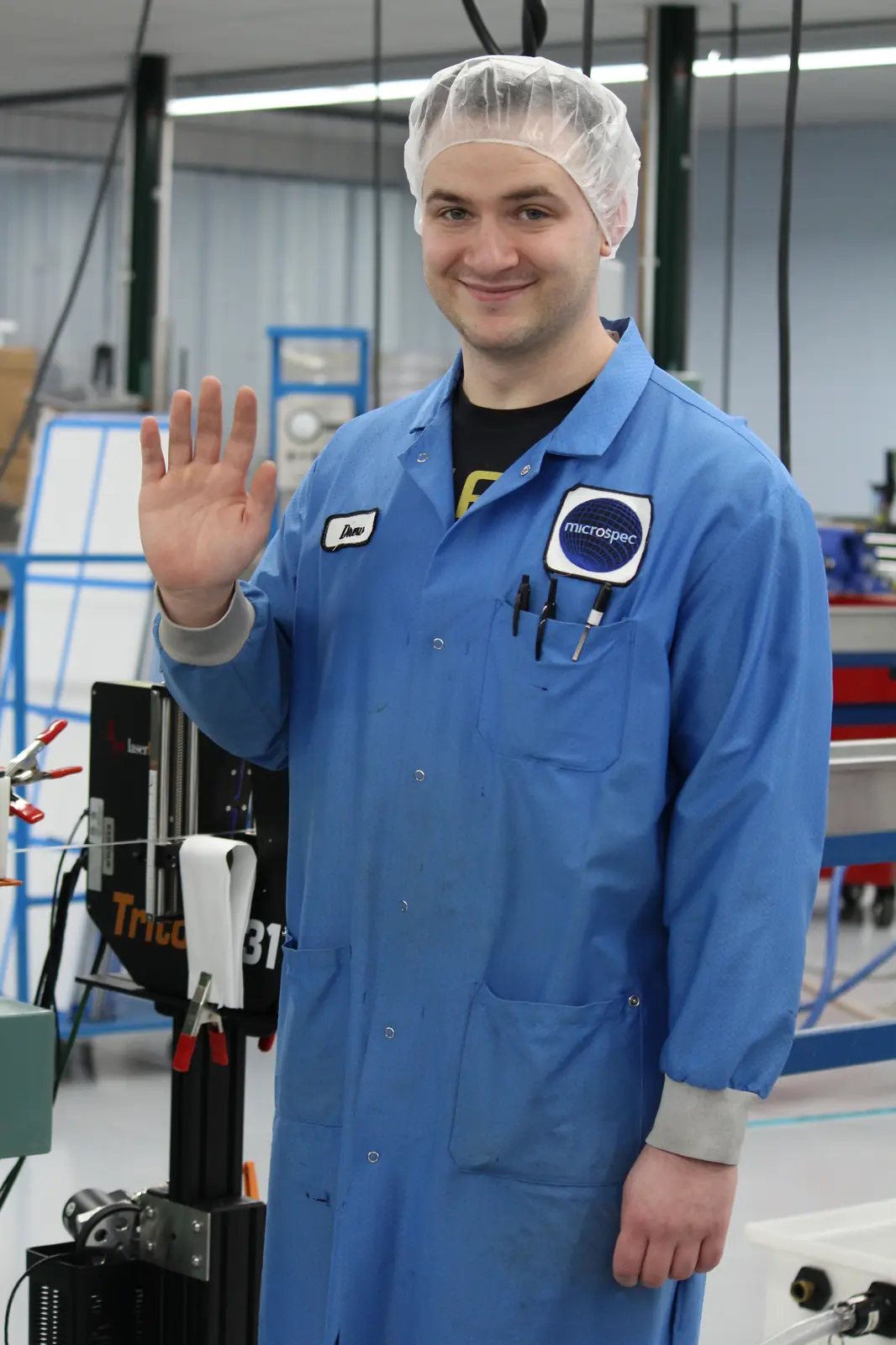
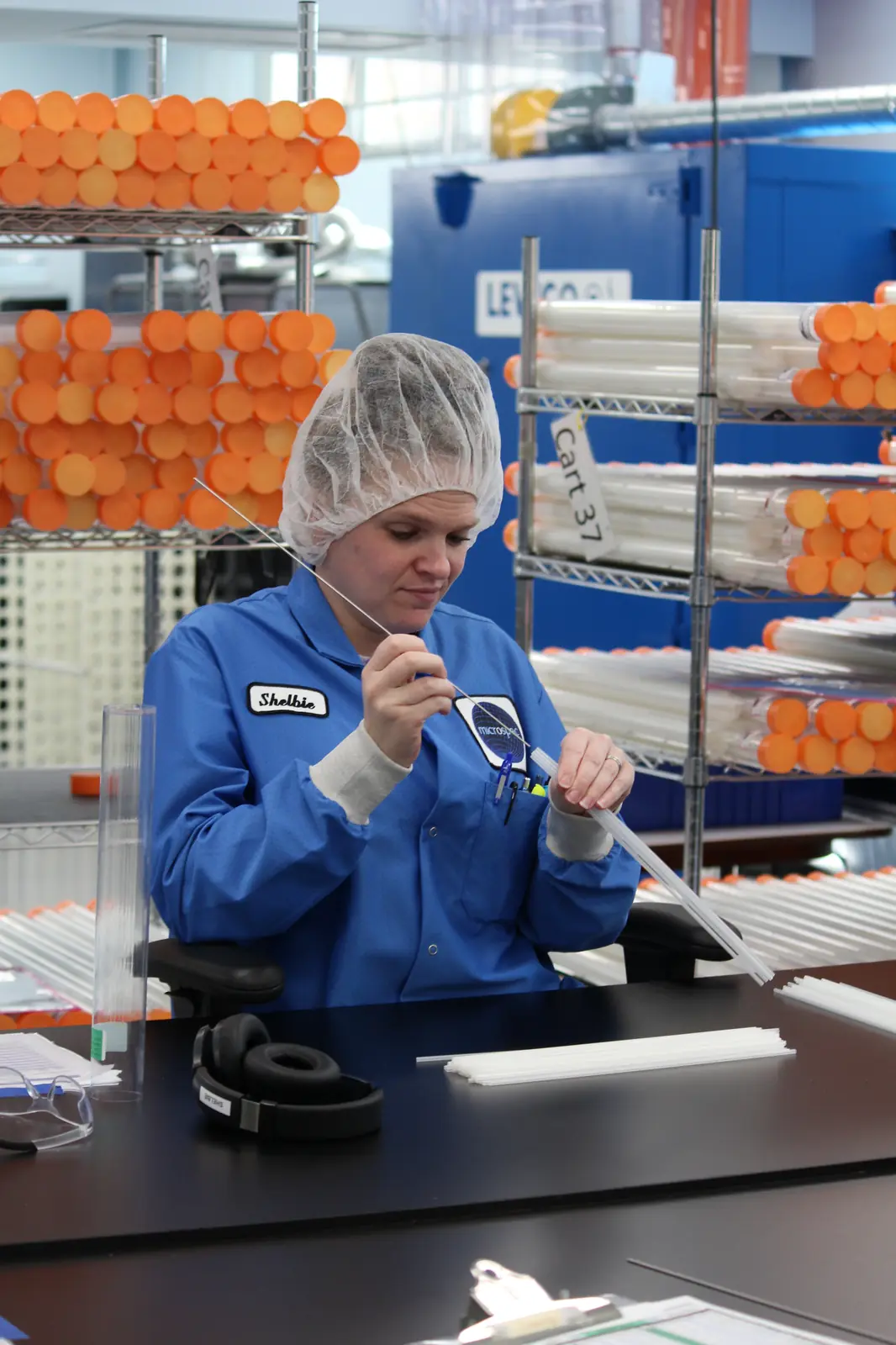
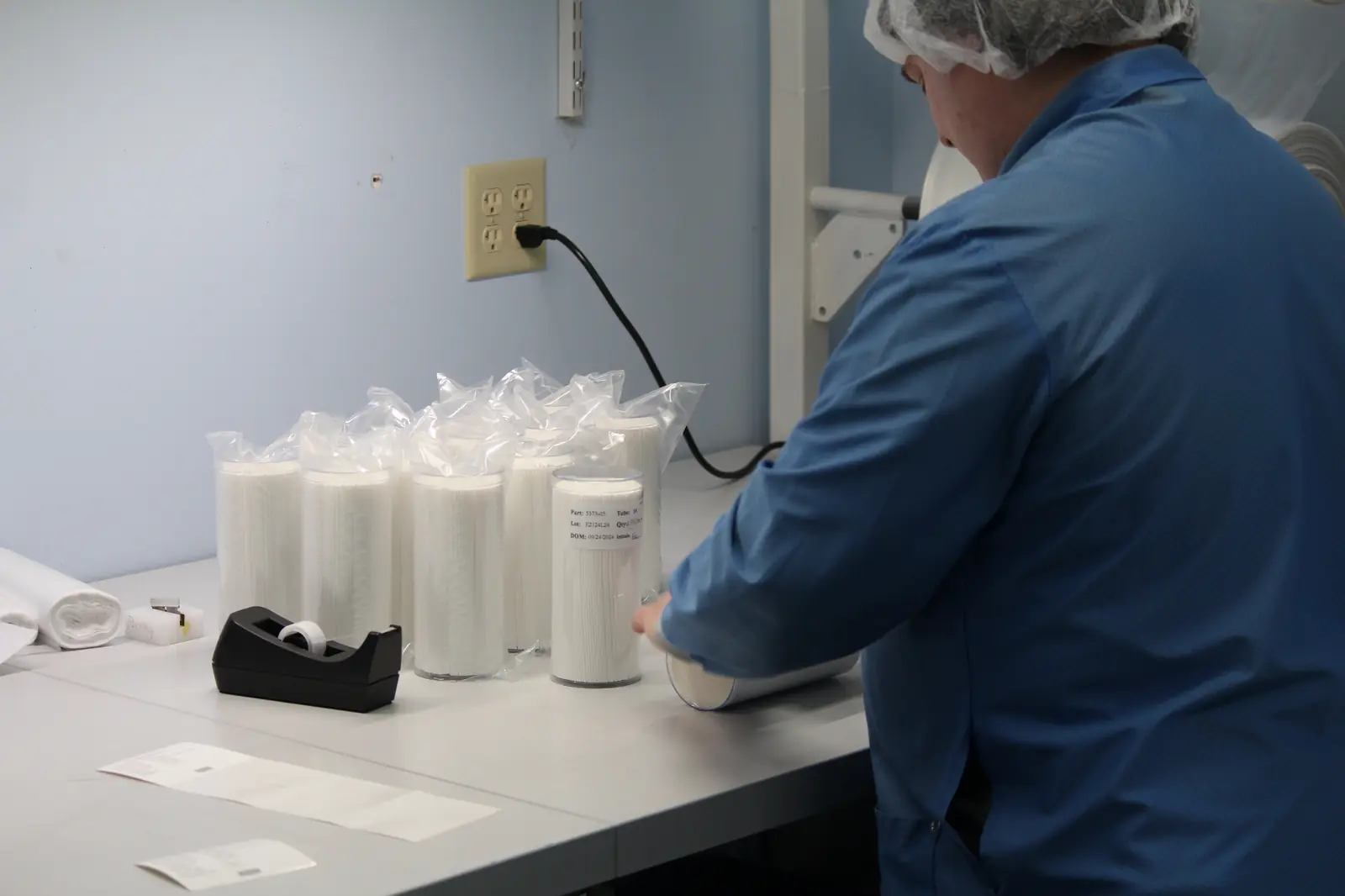
Knowledge of extrusion materials, tools and processes runs deep here. Our technicians average more than a decade of experience, and our team of about 120 people has very low turnover.
We’re large enough to handle the most demanding commercial runs, yet every person on the floor is personally committed to the quality of your tubing. We alert you when new materials come to market, and we call when our records show your inventory is running low.
Questions
Medical extrusion, answered.
Still have a question? Our team is happy to talk it through.
What is medical extrusion?
Medical extrusion is the process of melting a medical-grade polymer and drawing it through a precision die to form continuous tubing or profiles with tightly controlled outside diameter, inside diameter, wall thickness and lumen geometry. Extruded tubing becomes the shafts of catheters, the jackets of guidewires and the channels of delivery systems.
What sizes of medical tubing can MicroSpec extrude?
We have extruded tubing as small as 0.004 inch (0.1 mm) OD, multi-lumen extrusions as small as 0.012 inch (0.3 mm), and multi-lumen bump tubing as small as 1.2 Fr. Our thinnest walls are 12.5 microns.
Which materials do you extrude?
Most thermoplastic elastomers and engineering resins, including medical polyurethanes, nylons and Pebax, high-heat plastics such as PEEK, PEI and polysulfone, and fluoropolymers such as FEP, EFEP and PFA. We also run custom compounds and can help you select a material and durometer.
Can you take a part from prototype to production?
Yes. We run small prototype lots and high-volume commercial runs in the same facility, and our JumpStart Validation Program takes your part through OQ and PQ, so it does not change hands between development and production.
How is quality controlled?
MicroSpec is ISO 13485:2016 certified by Intertek. We use automated vision systems and laser gauging, evaluate tubing at the start of, during and after each run and before shipment, and perform burst and tensile testing.
What do you need to quote a custom extrusion?
Your drawing or specifications: OD and ID tolerances, wall thickness, number and size of lumens, cut length, material and durometer, plus quantities and schedule for prototype, validation and commercial runs. If you only have a problem to solve, start there and we’ll help define the rest.
Have a design that stumped another extruder?
Send us your specs, drawing or just describe the problem. A member of our team will follow up personally to walk through tolerances, materials and schedule.
Start a project
Tell us about your part and our team will follow up personally.
Have full drawings and tolerances? Use our detailed request form.