
- Home
- Custom Medical Tubing & Extrusions
- Co-extrusion & Tri-extrusion
Co-extrusion & Tri-extrusion
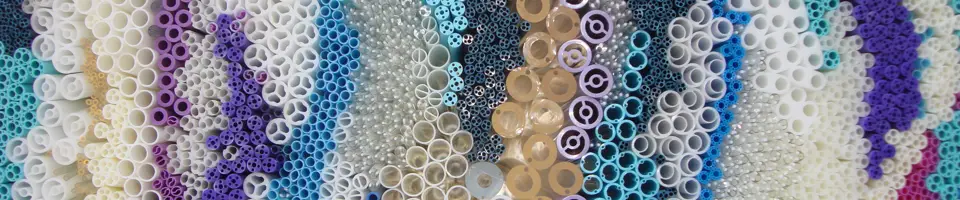
Co-extruded and tri-extruded medical tubing with layered walls, liners and encapsulated radiopaque stripes, made with our own crossheads.
What is co-extrusion?
Co-extrusion, sometimes written co extrusion, is one of the most useful tools in catheter design.
Co-extrusion combines or layers two or more materials in one extruded tube so the tube takes on characteristics of each. One material might help a very small tube stay flexible enough to reach further into the vasculature, while another supplies the strength and kink resistance needed to push it there. Co-extrusion can also change a tube’s appearance, chemical characteristics or mechanical attributes, such as lubricity.
MicroSpec’s people were key developers of co-extrusion technology. In 1994 we designed a special co-extrusion crosshead to make a two-lumen tube with two encapsulated radiopaque stripes. That part is still our longest-running product.
Types of co-extrusion we run
| Construction | What it does | Typical use |
|---|---|---|
| Multi-layer walls | Two or three materials bonded in concentric layers | Stiff outer jacket with a soft or slick inner layer |
| Encapsulated stripes | Radiopaque or colored stripes fully enclosed in the wall | Visibility under X-ray and orientation marking |
| Liners | A thin lubricious or chemically resistant inner layer, even inside multi-lumen tubes | Smooth passage for wires and devices, aggressive fluids |
| Tri-extrusion | Three materials in one tube | Complex shafts that need three different properties |
| Co-extruded bump tubing | Layered construction through a diameter transition | Tapered catheters with distinct inner and outer materials |
Recent co-extrusion work
Co-extrusion and tri-extrusion are routinely integrated with our other technologies. Examples include a tri-extruded 10-lumen tube with a 360-degree helical twist every 16 inches (406 mm) along its length, and a co-extruded two-lumen tube made with our BAT tooling technology, which we first used for co-extrusion in 2024. We can also extrude liners into multi-lumen tubes to improve lubricity or chemical resistance.
Choosing materials that work together
Not every pair of resins will co-extrude. The layers must bond, or be designed not to, and they must flow at compatible temperatures. Pebax®, for example, can be co-extruded with polyurethanes, while fluoropolymers resist bonding and need careful design. Our machine shop and custom tool design let us take on co-extruded parts others would turn away.
On this page
Co-extrusion facts
| Since | 1994 striped tube, still running |
| Layers | Co- and tri-extrusion |
| Features | Stripes, liners, layers |
| Tooling | Proprietary crossheads, in-house |
| Quality system | ISO 13485:2016 |
Combining two materials?
Tell us what each layer has to do. We will tell you whether they will run together.
Our crossheads
Proprietary crossheads, built here.
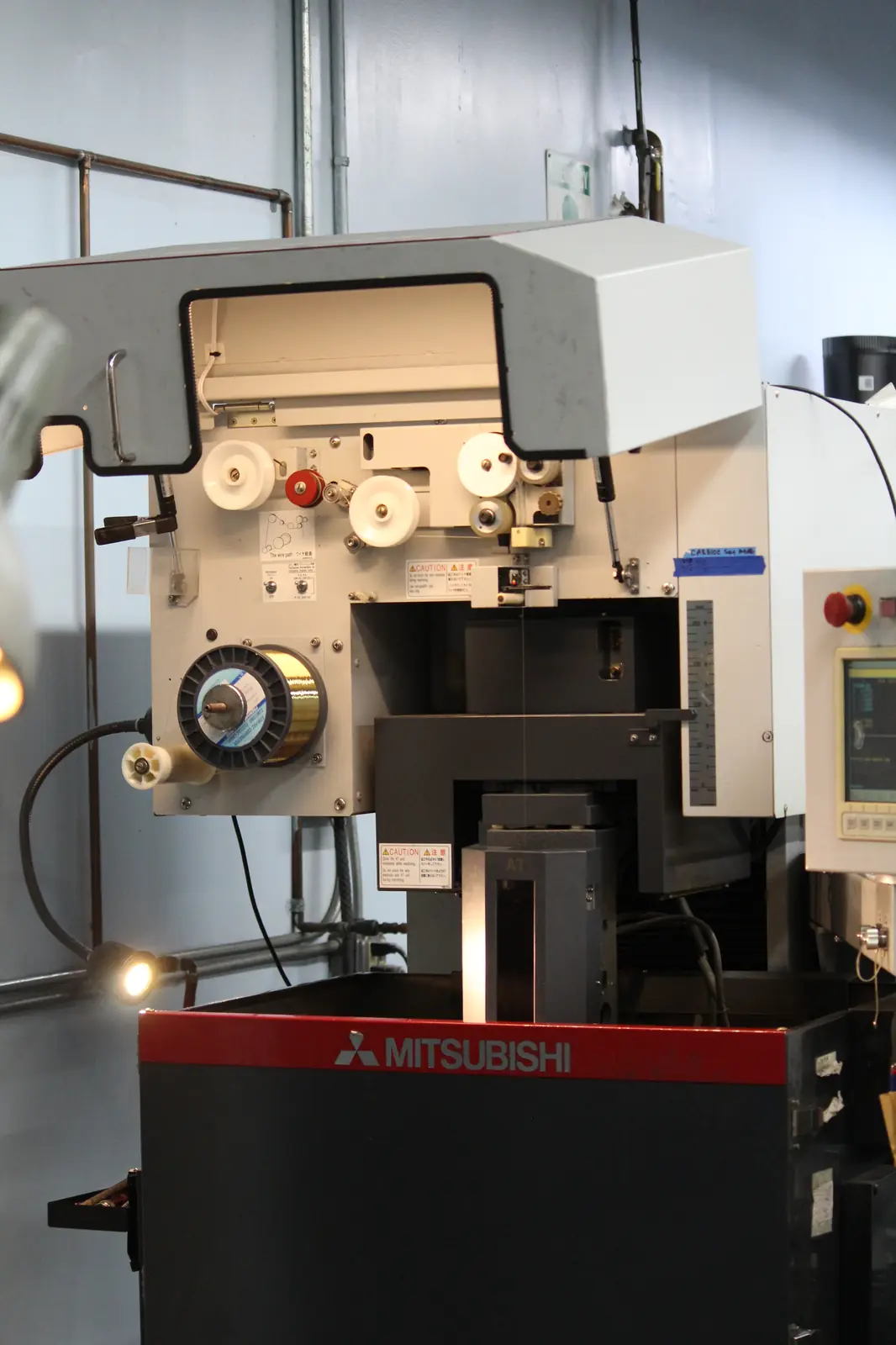
Co-extrusion depends on the crosshead, the tooling that brings each melt stream together in the right place and thickness. We design our own proprietary crossheads and cut the parts on our wire EDM and CNC equipment. In 2023 we redesigned our spiral crosshead chuck, the kind of improvement that happens quickly when tooling is made in-house.
- Wire EDM and MasterCAM programming
- Tooling changes made in days, not weeks
- Designs refined with each new part
Benefits
Why co-extrude?
Combined properties
Flexibility and pushability in one tube.
Radiopacity
Encapsulated stripes show under X-ray.
Lubricity
A slick inner liner for wires and devices.
Chemical resistance
A resistant layer where fluids are aggressive.
Fewer parts
Replace bonded or sleeved assemblies.
Kink resistance
Pair a soft outer with a strong inner layer.
Keep exploring
Related extrusions.
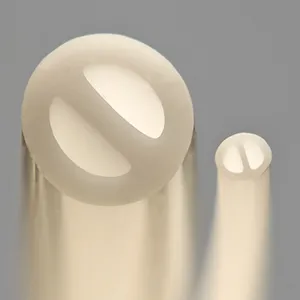
Bump tubing
Co-extruded tapers for catheter shafts.
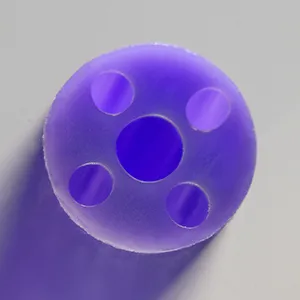
Multi-lumen tubing
Liners and stripes in multi-lumen designs.
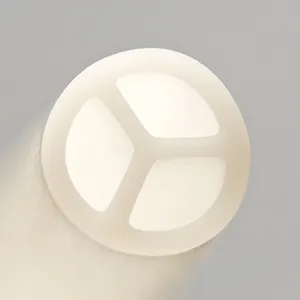
Fluoropolymer tubing
FEP and PFA liners for low friction.
Questions
Co-extrusion, answered.
Questions about layered or striped tubing? Ask us.
What is a co-extruded tube?
A co-extruded tube is made from two or more materials extruded together, either as layers in the wall or as features like encapsulated stripes, so the tube combines properties of each material.
What is tri-extrusion?
Tri-extrusion uses three materials in one tube. We run tri-extruded tubing, including a 10-lumen tube with a 360-degree helical twist every 16 inches (406 mm).
Can you add radiopaque stripes?
Yes. Encapsulated radiopaque stripes are one of our longest-standing capabilities, going back to a two-lumen striped tube we first made in 1994.
Can you put a liner inside a multi-lumen tube?
Yes. We can extrude liners into multi-lumen tubes to enhance lubricity or chemical resistance.
Which materials can be co-extruded together?
It depends on bonding and processing temperatures. Pebax and polyurethane co-extrude well, for example. We review your materials before tooling is designed.
Combining materials in one tube?
Send us your specs, drawing or just describe the problem. A member of our team will follow up personally to walk through tolerances, materials and schedule.
Start a project
Tell us about your part and our team will follow up personally.
Have full drawings and tolerances? Use our detailed request form.